Miles Davis - Kind Of Blue -1959- Flac 24-96 Sacd Site
Join the 4m players who have used the Aiming.Pro aim trainer to practice, train and improve their FPS aim skills
Start Aim Training




Join the 4m players who have used the Aiming.Pro aim trainer to practice, train and improve their FPS aim skills
Start Aim Training
Enter the search for the holy grail: . This string of characters represents the apex of digital remastering. But what does it actually mean? Is the 24-bit/96kHz FLAC superior to the SACD layer? And can digital bits truly capture the smoky intimacy of Rudy Van Gelder’s original engineering?
Why? Because Kind of Blue is not background music. It is a roadmap of human emotion recorded on magnetic oxide. In the wrong digital format, it becomes a flat historical document. In , specifically from that 1999 DSD master, the music breathes. You hear Miles’ hesitation before the first note of "Blue in Green." You feel the cigarette smoke in the control room. Miles Davis - Kind Of Blue -1959- FLAC 24-96 SACD
The recording was revolutionary for its use of modes (scales) rather than complex chord changes, allowing the players to drift like ghosts over a static harmony. Engineer Fred Plaut captured this magic using three-track Ampex 300 tape recorders running at 15 ips (inches per second). Enter the search for the holy grail:
This article dissects the history, the remastering wars, and the technical specifications to help you decide which high-resolution version belongs in your library. Before diving into codecs, let’s revisit the session. On March 2 and April 22, 1959, Miles Davis walked into Columbia’s 30th Street Studio (a converted Armenian church in Manhattan) with a sextet: John Coltrane (tenor sax), Julian "Cannonball" Adderley (alto sax), Bill Evans (piano), Paul Chambers (bass), and Jimmy Cobb (drums). Is the 24-bit/96kHz FLAC superior to the SACD layer
Standard Red Book CD (16-bit/44.1kHz) struggles to reproduce the micro-dynamics of Chambers’ bowed bass or the "room tone" of the church’s wooden floors. The original analog master tapes have degraded over 65 years. To truly hear "So What" as Miles intended, you need a transfer that captures the analog warmth without digital brick-walling.
In the pantheon of recorded music, few albums command the reverence, scholarly analysis, and sheer listening hours as Miles Davis’ Kind of Blue . Released in 1959 by Columbia Records, it didn’t just change jazz; it rewired the DNA of modal improvisation, influencing everything from rock to classical. But for the modern audiophile, the question is no longer just which pressing to buy, but which digital format reveals the soul of the original three-track tape recordings.
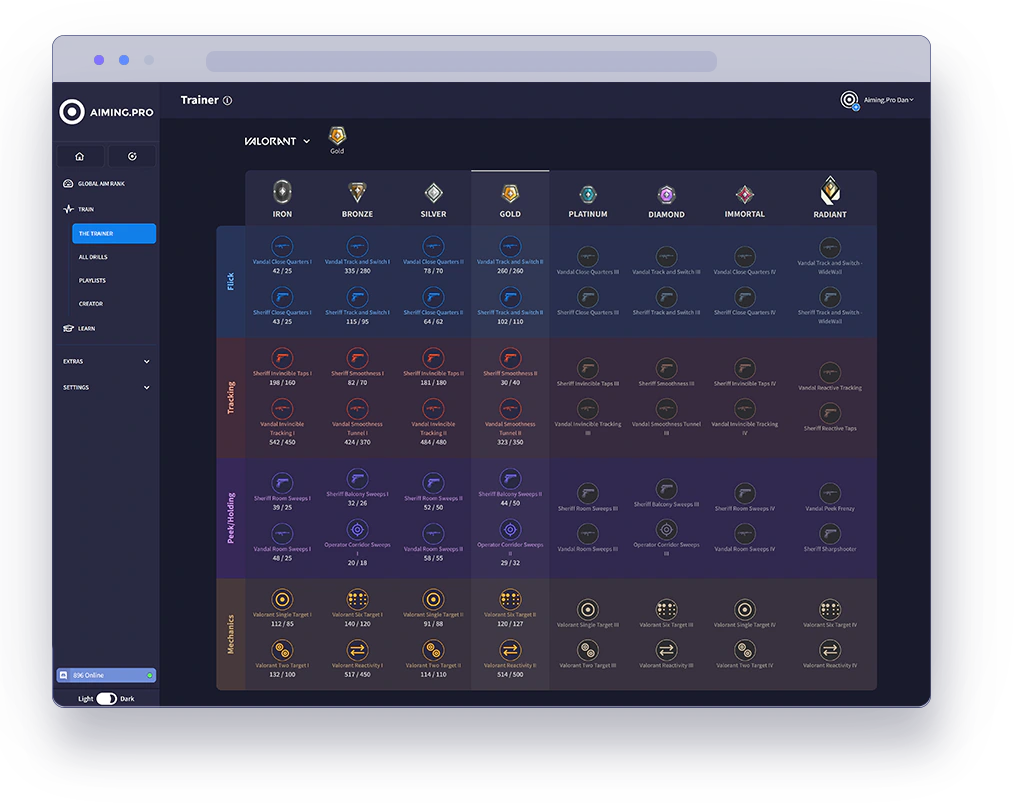
The Trainer is the best way to rank up in specific
FPS games using our aim trainer.
Our pros have analysed each game’s core concept
to carefully select drills that optimise your aim in the
areas that count. Hit the target goal in each level
and keep moving forwards to join the elite ranks of
Valorant, Apex, CSGO and COD.
Start your journey with The Trainer now
to unleash your full gaming potential.





See how you stack up against millions of players in our global community. Getting ranked lets you compete in our latest season of drills and weekly challenges.
Rank your aim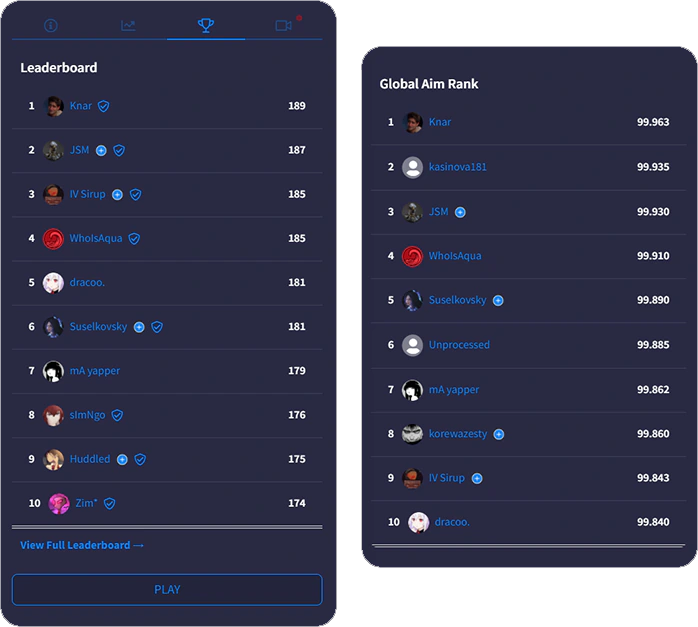
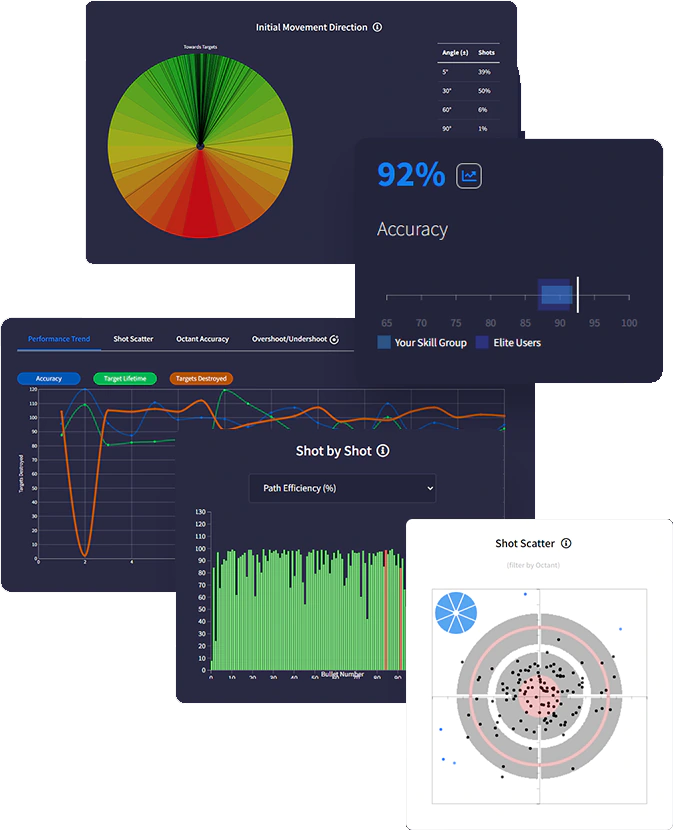
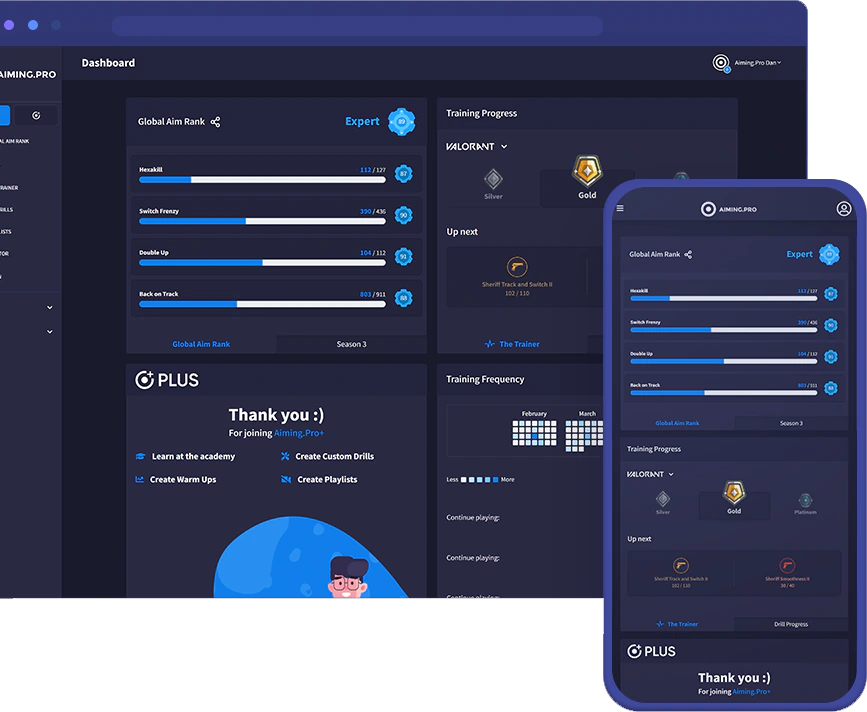
Get a deeper understanding of your performance with
with advanced data tracking. Discover insights that
uncover your strengths & weaknesses so you know
exactly how to optimise using actionable feedback.
Track everything after each drill with tons of metrics
measuring accuracy, reaction times, mouse speed,
move angles and more - the most in-depth analytics
ever built in an aim trainer.
Intelligently predict effective routines on evaluation of
your stats and trends. Analysing performance data
gives personalised feedback recommending skill areas for optimisation.
We support total synchronicity with all favourite FPS games. Our mouse sensitivity, FOV conversion, weapons and ADS variability accurately match real gaming physics ensuring all your aim gains translate into actual improved gameplay.

Sync sensitivity settings
to all FPS games

Adjust FOV to match
in-game preferences

Recreate ADS zoom &
sensitivity for every scope

Match weapon parameters
including rate of fire

Customise crosshair, hit
markers, textures & targets

Add your own sounds for
shots, hits, spawn & more
Enter the search for the holy grail: . This string of characters represents the apex of digital remastering. But what does it actually mean? Is the 24-bit/96kHz FLAC superior to the SACD layer? And can digital bits truly capture the smoky intimacy of Rudy Van Gelder’s original engineering?
Why? Because Kind of Blue is not background music. It is a roadmap of human emotion recorded on magnetic oxide. In the wrong digital format, it becomes a flat historical document. In , specifically from that 1999 DSD master, the music breathes. You hear Miles’ hesitation before the first note of "Blue in Green." You feel the cigarette smoke in the control room.
The recording was revolutionary for its use of modes (scales) rather than complex chord changes, allowing the players to drift like ghosts over a static harmony. Engineer Fred Plaut captured this magic using three-track Ampex 300 tape recorders running at 15 ips (inches per second).
This article dissects the history, the remastering wars, and the technical specifications to help you decide which high-resolution version belongs in your library. Before diving into codecs, let’s revisit the session. On March 2 and April 22, 1959, Miles Davis walked into Columbia’s 30th Street Studio (a converted Armenian church in Manhattan) with a sextet: John Coltrane (tenor sax), Julian "Cannonball" Adderley (alto sax), Bill Evans (piano), Paul Chambers (bass), and Jimmy Cobb (drums).
Standard Red Book CD (16-bit/44.1kHz) struggles to reproduce the micro-dynamics of Chambers’ bowed bass or the "room tone" of the church’s wooden floors. The original analog master tapes have degraded over 65 years. To truly hear "So What" as Miles intended, you need a transfer that captures the analog warmth without digital brick-walling.
In the pantheon of recorded music, few albums command the reverence, scholarly analysis, and sheer listening hours as Miles Davis’ Kind of Blue . Released in 1959 by Columbia Records, it didn’t just change jazz; it rewired the DNA of modal improvisation, influencing everything from rock to classical. But for the modern audiophile, the question is no longer just which pressing to buy, but which digital format reveals the soul of the original three-track tape recordings.